Fun pinyin songs and chants for kids — how rhymes build tone awareness and sound memory, with simple sing-along activities using printable Mandarin materials.
Pinyin Songs for Kids: Rhymes & Chants That Teach Tones and Sounds
How singing makes Mandarin tones less scary — and a few simple sing-along activities you can do with printable pinyin materials at home.
If your child freezes at the word "tones," try a song before a worksheet. Rhymes turn pitch patterns into something the ear already knows how to follow. A tune carries the tone so the child is practicing mā má mǎ mà without staring at marks they do not yet trust.
This guide shows what pinyin songs actually teach, which pages in our printable collection use them, and three sing-along activities you can try today. No musical ability required — humming counts.
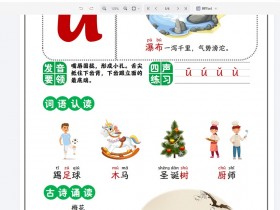
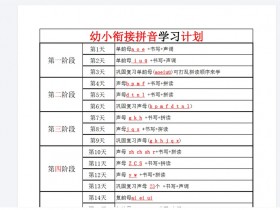
One share folder: 1 video course + 33 printable PDFs, including 拼音77首.pdf (77 chants) and 一年级上册拼音儿歌汇总.pdf.
What Pinyin Songs Actually Teach
| Skill built | Why a song helps | Pages in this collection |
|---|---|---|
| Tone memory | The melody fixes the pitch contour (level / rising / dip / fall) in the ear | 拼音77首.pdf, 一年级上册拼音儿歌汇总.pdf |
| Sound–letter link | Repeated finals (a, o, e) get mapped to their written form through repetition | same song sheets above |
| Rhythm of speech | Clapping syllables trains the ear to hear where one syllable ends and the next begins | any chant sheet |
| Low-pressure review | A familiar tune lets a tired child review without a "lesson" feel | mixed-review song pages |
Songs are a support, not a replacement. Use them to warm up or review; pair them with a short worksheet task so the sound also connects to writing.
Before You Begin: Songs Carry Sound, Not Meaning
Pinyin songs drill pronunciation patterns. They do not teach what characters mean — that is a separate step. Keep the two goals separate so neither feels like a failure.
For accurate pitch, let a recording lead. The University of Texas at Austin's free Pitch Perfect Pinyin and the Open University's beginner audio both model tones you can sing along with (laits.utexas.edu/ppp; open.edu — single finals). Your job is to press play and join in, not to be the expert voice.
Tones Through a Simple Tune
The four tones on ma map neatly to a little melodic shape:
| Tone | Syllable | Sing it as |
|---|---|---|
| 1st | mā | One steady note held level |
| 2nd | má | Note sliding up |
| 3rd | mǎ | Note dipping down then a small lift |
| 4th | mà | Note dropping sharply |
Try a Hum-and-Point activity
Play a tone from your audio. Hum it, then point to the matching syllable on a song sheet. Let the child hum back. No writing yet — just ear, voice, and finger.
Single-Final Rhymes
Most beginner chants loop the six single finals a o e i u ü. That repetition is the point: the child hears a in many words and learns to spot it on the page.
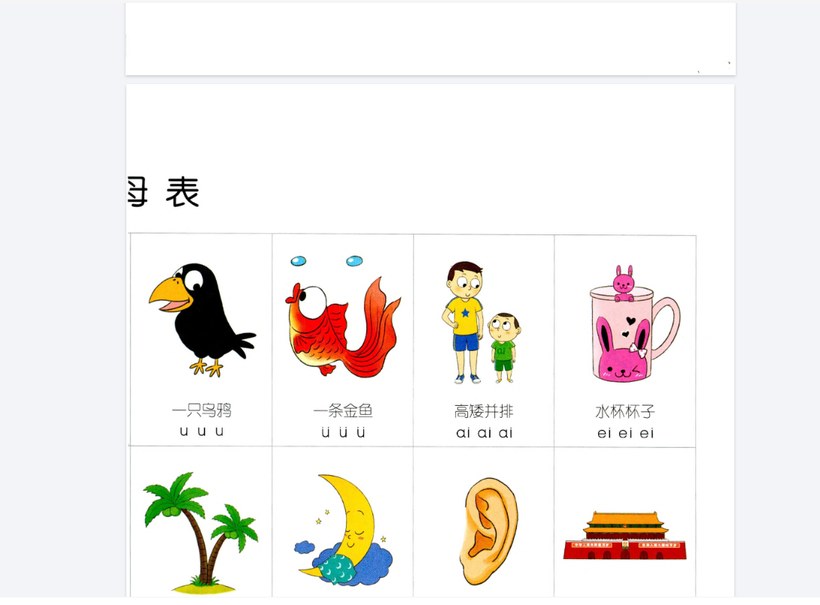
u, ü, ai, ei), so the ear and the eye learn together.
Try a Find-the-Rhyme activity
Pick one final, say a. Sing a line, then ask your child to point to every a they can see in that line. Keep it to one final per round so the pattern is obvious.
Blending Through Chant
Once a few initials and finals are known, chants that pair them (b-a-ba, p-a-pa) train blending by ear. The mouth says the parts, then the whole — exactly the skill a blending worksheet asks for on paper.
Try a Clap-the-Syllables activity
Sing a two-syllable word from the sheet and clap once per syllable. The child copies. This builds the "one beat = one syllable" habit that makes pinyin readable later.
Three Mini Sing-Along Exercises
These are original activity ideas written for this guide, not reproductions of the song sheets. Answers are at the end.
Exercise 1 — Match the tone to the shape
Draw the pitch shape you hear for mǎ: level ___ / up ___ / dip ___ / down ___.
Your audio says: low dip. Circle it.
Exercise 2 — Find the repeated final
In the line ba ba pa ma, which final repeats most? ___
a / m / p
Exercise 3 — Count the syllables
Clap ma ma ha ha. How many claps? ___
Answers — Exercise 1: dip. Exercise 2: a. Exercise 3: 4 claps.
A Simple 10-Minute Sing-Along Routine
| Minutes | What to do |
|---|---|
| 0–3 | Warm up: hum one tone pattern (level / rising / dip / fall) with the audio. |
| 3–6 | Sing one short chant from the sheet together, pointing to the finals as you go. |
| 6–9 | Play: clap syllables or find a repeated final on the page. |
| 9–10 | Note one sound to revisit next time. |
Frequently Asked Questions
Do pinyin songs replace lessons?
No. They build ear and confidence. Pair a song with one short worksheet task so sound also meets writing.
Can a non-Mandarin-speaking parent still use songs?
Yes — press play and sing along. The recording is the model; your enthusiasm is the motivator. See our guide for non-native parents for the full facilitation approach.
Is screen time a problem?
Use the song sheets on paper and the audio only. Ten minutes of audio-led singing is low-screen; you can even mute a video and just use its soundtrack.
When should we add characters?
Whenever the child is curious. Keep pinyin as the sound label and introduce characters separately, so neither skill blocks the other.
How do I print the song PDFs?
Preview, print one test page, check the pinyin and tone marks are clear, then print only the sheets you will use next.
Start With One Song
Pick a single short chant. Hum it, point to one final, clap the syllables. That is a complete session. The rest of the 77 can wait.
Free share folder. Open in the Quark app or web. Overseas access note below.
• Pinyin Worksheets for Kids — printable tracing, tone and blending sheets
• Teach Pinyin at Home (Non-Native Parent) — audio models and a 10-minute routine
• Chinese Pinyin Chart for Kids — printable initials, finals and tones
• Chinese Pinyin for Kids: Parent’s Guide — start here for the full path
Parent-to-parent guide, not a licensed curriculum. Pinyin is a pronunciation aid, not a replacement for character learning. Preview and print only materials you are authorized to use. External audio links are free reference resources and are not affiliated with this site.
Disclaimer: The resources mentioned on this page are collected from public channels for personal learning and sharing. All copyrights belong to their original authors or publishers. Please do not use them for commercial purposes, and delete the files within 24 hours of downloading. If any content appears to infringe a copyright, contact us and we will remove it promptly. Whenever possible, please support the original creators by purchasing official versions.